The Breathings of the Moon
The Breathings of the Moon is a collection of AI-generated shells, trained on a dataset of photographs taken over many years along the Thames. The images are produced using a combination of neural networks: the detail is finer than was achievable when the project began but still retains, on close inspection, the weirdness of generated images. The Thames is a tidal river, with two tides a day. A protocol inside the smart contract dictates that each shell is only visible at low tide; at high tide, the image is covered entirely in black. Each token is assigned a different location along the river, from the head of the tidal reach to the mouth, so that the images emerge and disappear at slightly different times as the tide moves. The work will run on this cycle twice a day, every day, for twelve years. The constraint is also a marketplace condition: the shell can only be sold when it is fully visible, which happens for around an hour in each tidal cycle. The work is interested in the introduction of friction into exchange — friction that asks a buyer or seller to slow down, to wait, to pay attention. Rather than an asset held in a wallet to accumulate value and traded at will, the work makes a demand: to know whether it can be sold at all, the owner must watch the tide come in.
Artist Notes (Thoughts & Process)
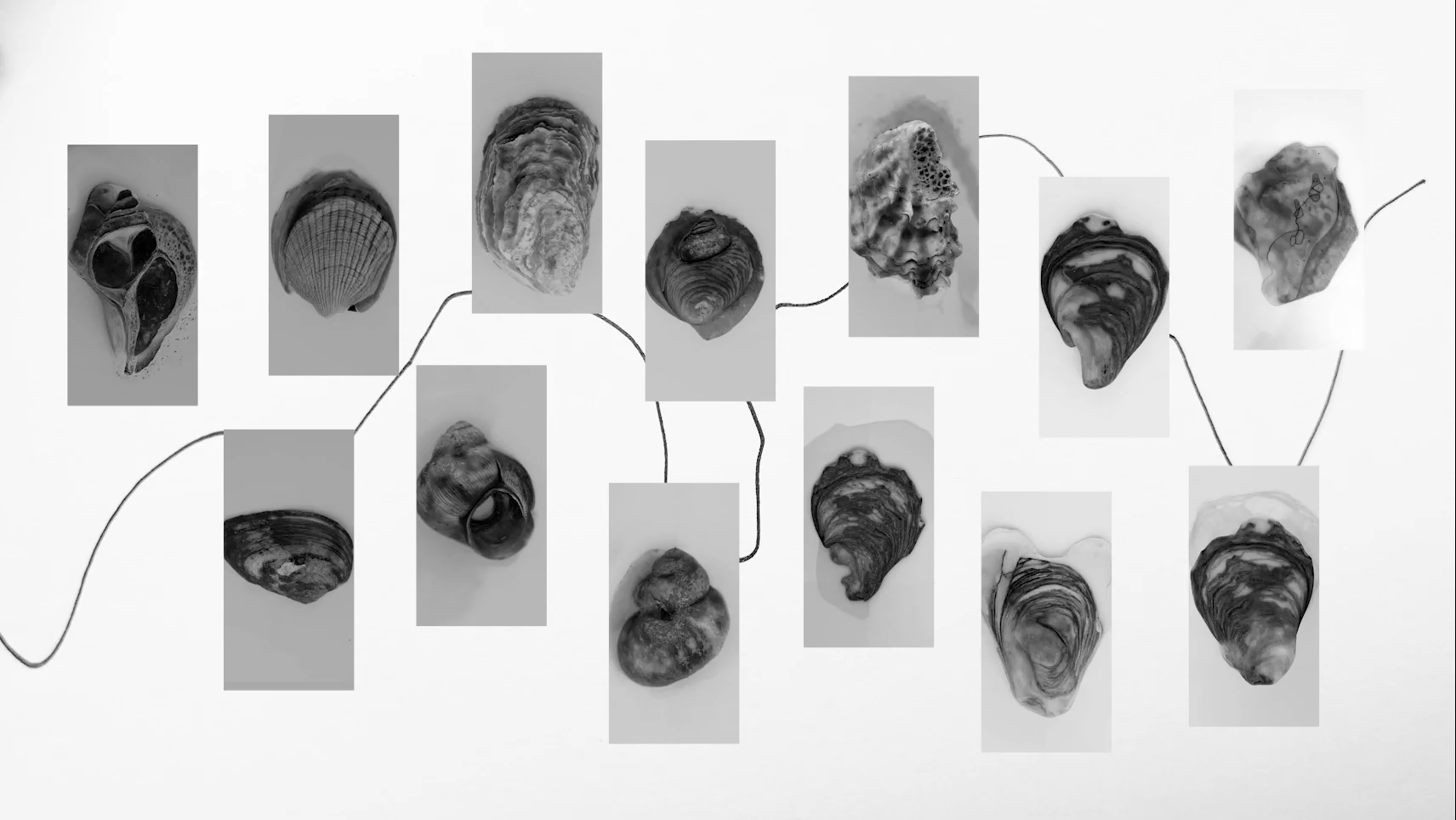
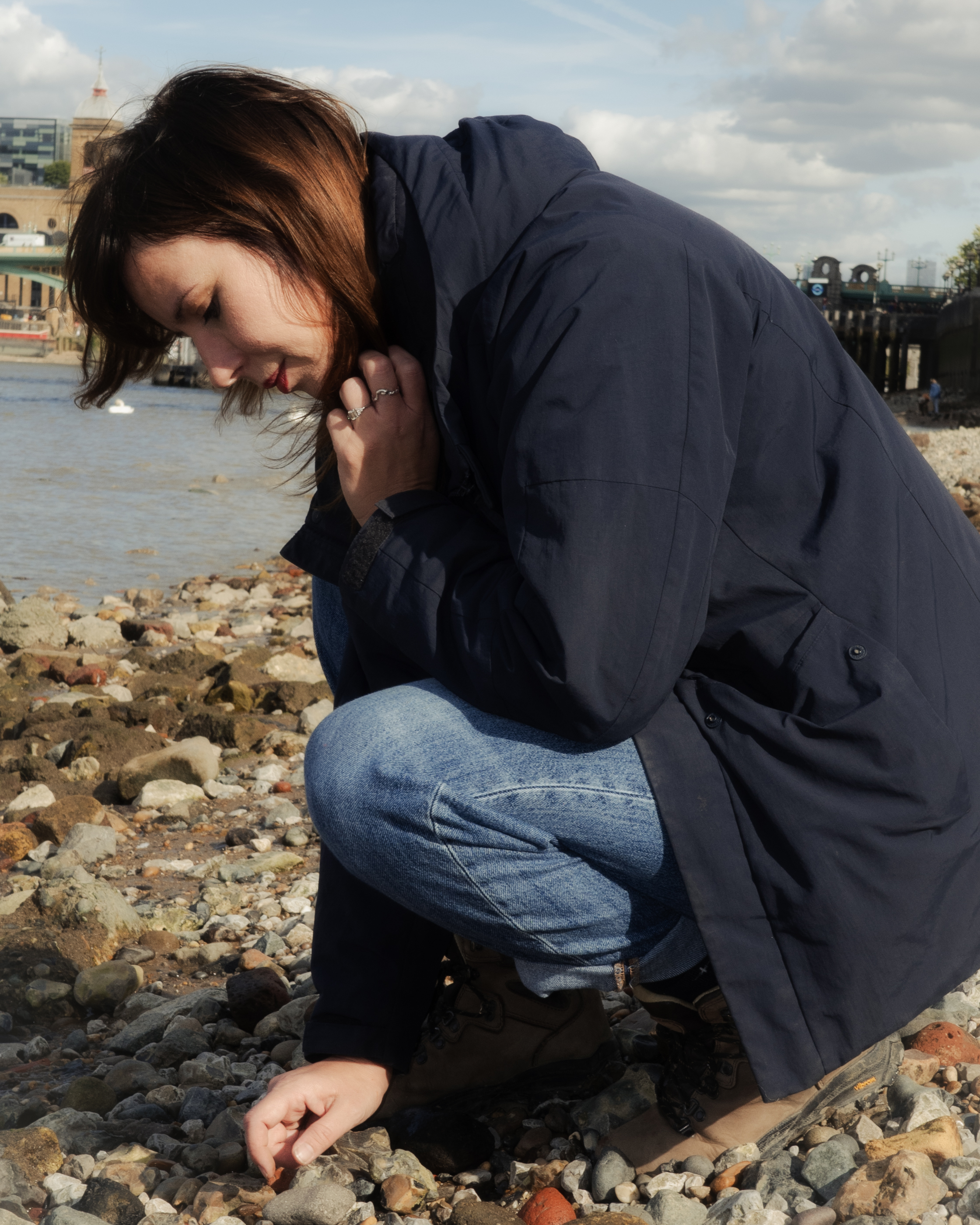
But the most admirable thing of all is the union of the ocean with the orbit of the moon. At every rising and every setting of the moon the sea violently covers the coast far and wide, sending forth its surge, which the Greeks call reuma; and once this same surge has been drawn back it lays the beaches bare and simultaneously mixes the pure outpourings of the rivers with and abundance of brine and swells them with its waves. As the moon passes by without delay, the sea recedes and leaves the outpourings in their original state of purity and their original quantity. It is as though it is unwittingly drawn up by some breathings of the moon, and then returns to its normal level when this same influence ceases. Opera de Temporibus, Section XXIX, the Venerable Bede, 703 AD. It is part of my ongoing interest in linking history and technology, objects and speculation and the nature found on the river Thames. I have been collecting shells from the foreshore of the Thames, one of the largest open archaeological sites in the world, right in the shadow of one of the centres of global financial capitalism for many years now. The act of collecting, cataloguing, training, generating and tokenizing these shells creates a new form of value in the shadow of the old. But these shells have a history of their own, far beyond their use as mere items of exchange. Shells have been used as stores of value and tokens of ritual significance for thousands of years. Before the rise of modern financial systems, shells were used as money on nearly every continent on earth. After the rise, shells were even the subject of a speculative mania (much like tulips) where European collectors spent enormous sums of money on rare shells in the 18th and 19th centuries. The title of the series references Bede, an English monk, who amongst other things was deeply interested in and influential in creating an ecclesiastical calendar system for the country. Part of the way that he did this was through observation of the world as he saw it - solstices, equinoxes, moons. Much of my work is also to do with cycles and knowing through things unfolding over time. It feels fitting for me to use his quotation in this work that questions what happens when natural cycles collide with manmade systems.
Exhibition Venues
Dissemination
The fifteen editions also come with an almanac. MORE