Circadian Bloom App
Circadian Bloom App is a new iteration of Anna Ridler’s ongoing Circadian Bloom project, translating the work into a mobile format that brings a time-based artwork into everyday life. The app functions as a visual clock that tells time through AI-generated flowers, drawing inspiration from Carl Linnaeus’s eighteenth-century concept of a “flower clock” — a garden designed to mark the hours through the natural opening and closing rhythms of plants. Seven different flowers appear onscreen, each blooming and closing in sync with its real-world counterpart. A morning glory opens at dawn; a night-blooming cereus unfurls only in the evening. Handwritten annotations move across the screen, noting which flowers are open and which are closed, reinforcing the work’s connection to observation and record-keeping. Generated using GANs and governed by atomic-level timekeeping, the app sets technological precision against soft, painterly imagery, inviting viewers to consider non-human ways of experiencing time. By presenting the work as an app, Circadian Bloom shifts an installation-scale artwork into the intimate space of the smartphone — the primary interface through which many people now encounter the digital. Removed from the gallery and embedded in daily routines, the project also functions as a form of public art. The app features a newly commissioned generative score by composer William Marsey. Each flower has its own sonic character that evolves throughout the day, mirroring the behaviour of the visual blooms. Users can mix these sounds in real time by moving on-screen “flowers,” creating an infinite range of soundscapes. Both the visuals and the soundtrack were created through closely related computational processes, further entwining image, sound and system within the work..
Artist Notes (Thoughts & Process)
Creating an app means working within systems over which you have very little control. App stores are heavily curated environments, governed by opaque and shifting rules about what can and cannot exist within them. To pass Apple’s review process, an app must be deemed “useful,” “unique,” or sufficiently “app-like,” without those terms ever being clearly defined. The App Store also explicitly warns that there are already “enough fart, burp, flashlight, fortune-telling, dating, drinking-game and Kama Sutra apps,” signalling how narrow and prescriptive the space has become. Apps are also subject to ongoing review: what might have been approved eighteen months ago may no longer be acceptable as expectations around interactivity and technological novelty grow. Within this context, getting something that is fundamentally an artwork approved becomes a challenge in itself. But it was important for me that this work existed as an app, designed to be used on a phone—the primary way most people now encounter digital content. By placing the work in this space, outside the gallery and within everyday routines, the app functions as a small piece portable and accessible of public art. Sound is a central component of the work, developed in close collaboration with composer William Marsey, with whom I have worked for many years. In order to fully understand how the piece operated, William engaged directly with the core Python script that governs the work, so that the way the artwork functions had a large impact on how the score was constructed and made. The score draws on a pop-orchestral recording of the overture to Tannhäuser, which is slowed, warped and processed—alongside field recordings from the natural world—until it becomes almost unrecognisable. This process of gradual transformation mirrors my own working methods, and it is this shared logic of deconstruction and re-making that has sustained our collaboration over time.
Exhibition Venues
References and Inspiration
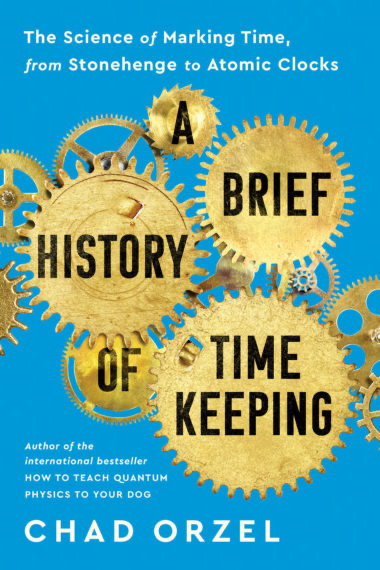 Chad Orzel, A Brief History of Timekeeping: The Science of Marking Time, 2022