Slowly Fading Quietly
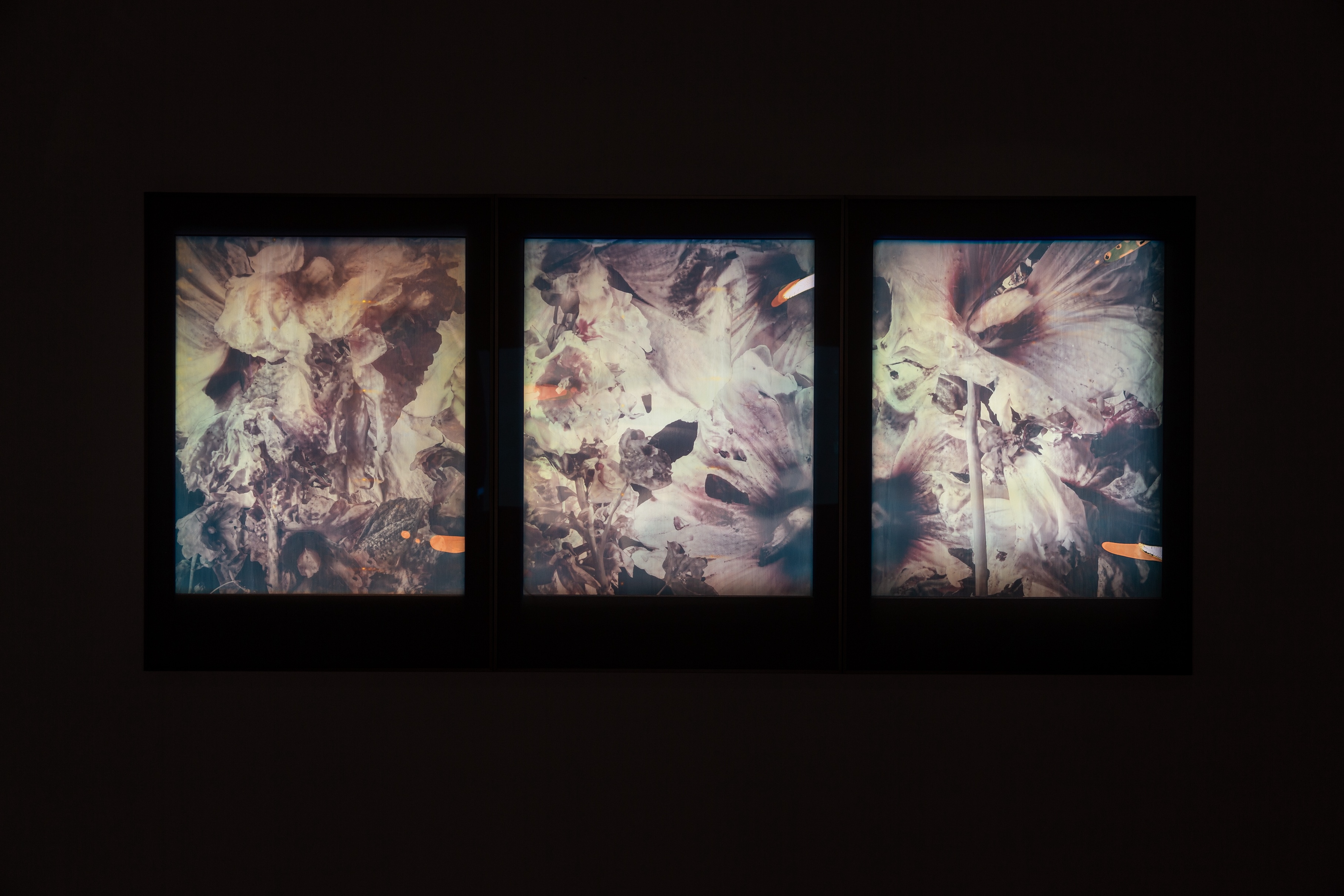
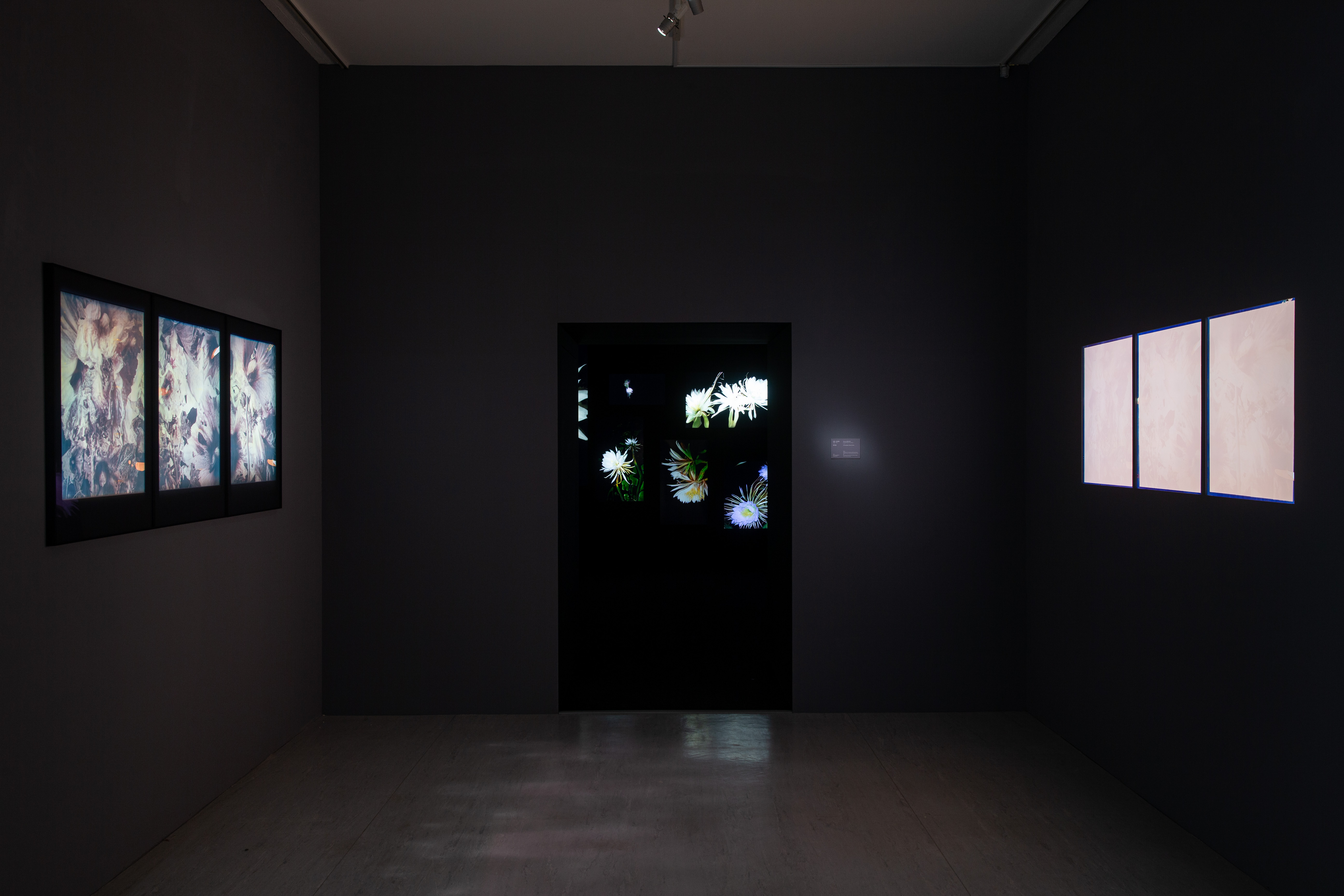
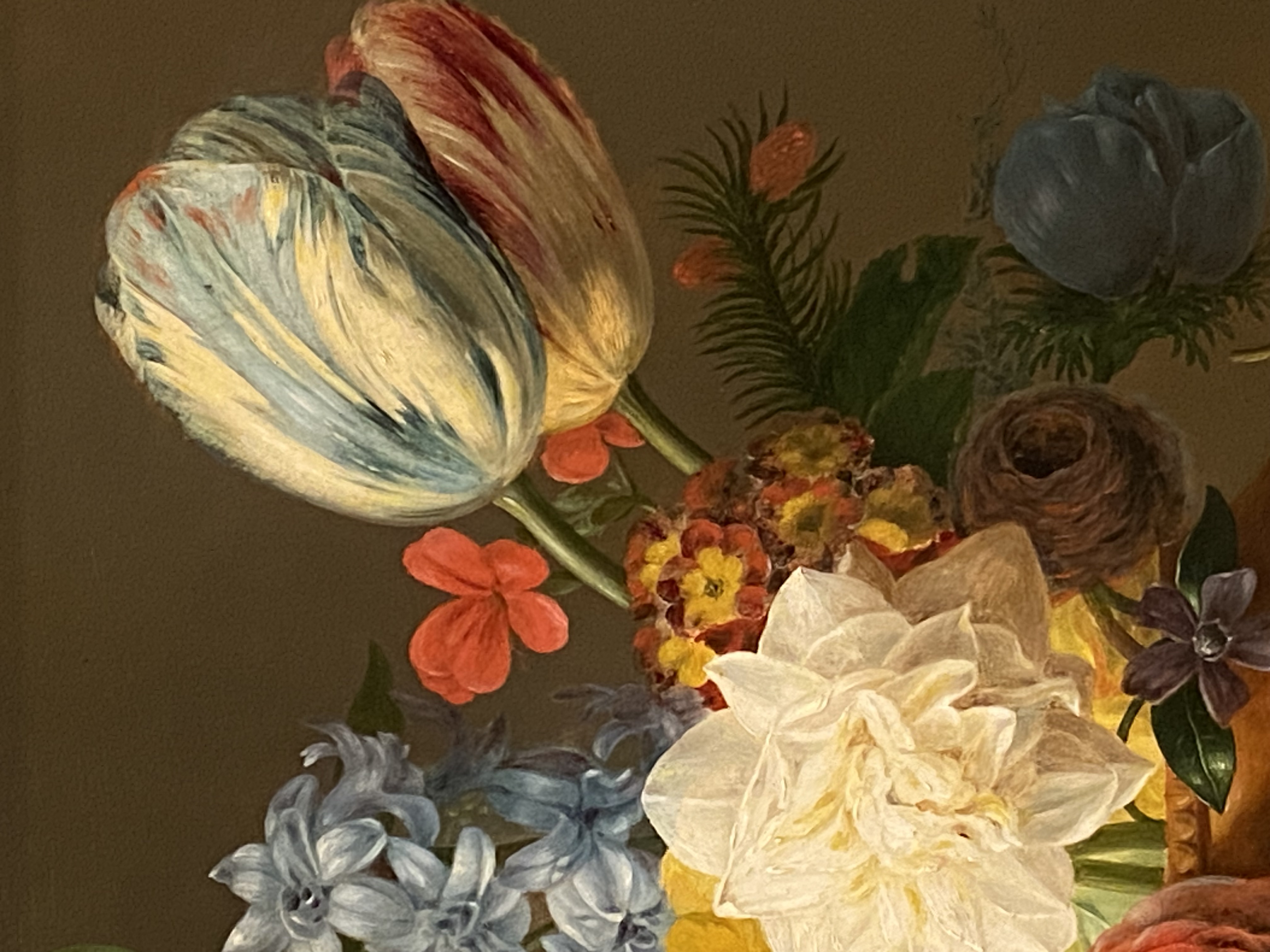
Slowly Fading Quietly (2024) consists of three large-format Polaroids of flowers and their digital counterparts, the two moving in opposite directions: the Polaroids fading almost entirely over eight years as the digital images grow more prominent. The work's decay is not fixed but rather calculated by an algorithm that requires the owner to record how many days the work has been displayed rather than kept in storage. The work's state is partly constituted by the owner's relationship to it: it refuses passive ownership at the level of its structure, instead requiring an ongoing, returning relationship with something that is simultaneously disappearing and arriving. The work sits within the long tradition of depicting the impermanence of flowers throughout art history, and continues Ridler's interest in instability and digital decay.
Artist Notes (Thoughts & Process)

I remember looking at the original Dutch still lifes in the Rijksmuseum. They’re still trying to shine in that faded way. Lots of details, like the stripes on tulip petals, have been lost because of how the paint has degraded. The painters were essentially working with the latest technology of the time, but they didn't know that that paint would become unstable. it’s more about the mirroring and movement of the two together. Nobody knows how long these technologies will last. Even some of my work from three years ago, the code doesn't run anymore because dependencies are no longer there. There’s no point aiming for the eternal. It's impossible. Even the most monumental artwork will eventually come to dust. This probably goes back to my interest in the natural world because I think that things should have a finite lifespan. If you look at the science of deep time – there was a start and there will be the heat death of the universe. I think that awareness creates a different kind of relationship to things. I'm interested in how you can enjoy them outside of the normal value system. That is mirrored in my work where so often things will disappear or fade away or stop working after a period of time. It’s about how we appreciate the transience rather than treating it as a commodity.
Exhibition Venues
Featured In

References and Inspiration

Dissemination
The contract address for this work is 0x2034D0C3961424AEE4964300277CBf5fFA864d78. The website for this work is https://slowlyfadingquietly.xyz/