2025
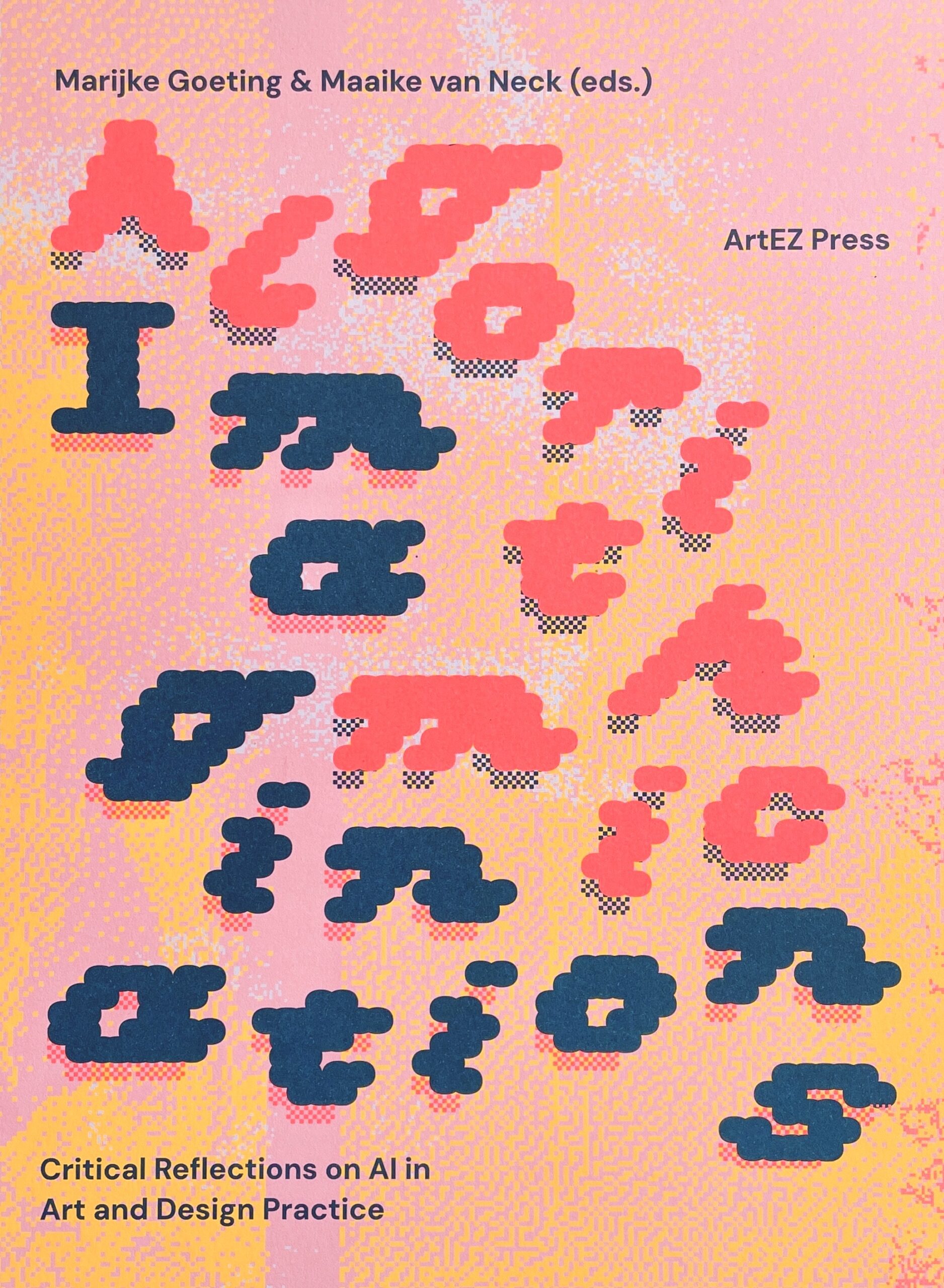
The Art of Categorisation
Algorithmic Imaginations | January 2025
An essay arguing that building a dataset is as ideologically loaded as any other act of classification. Drawing on years of hand-labelling tens of thousands of images - tulips, irises, canal photographs - it examines how the choices embedded in dataset construction determine what an AI system can see, know and produce. The essay proposes that working against the grain of commercial data production, through slowness and subjectivity, is not merely a practical method but a political one: a refusal of the standardising logic that transforms the living world into legible, tradeable information.
Read in full →2022
The Landscape of Finance
Art + Water, V2_ Lab for the Unstable Media | November 2022
Published as part of the Water Capitalism residency at Gluon, this essay investigates how water has been manipulated, commodified and obscured across the Flanders region from the medieval period to the present. Working with photographic datasets of the Ghent-Terneuzen Canal and moving image driven by stock market data, the piece traces how the same infrastructure of water management - taming rivers, straightening channels, rerouting flood plains - is continuous with the logic of financial abstraction: resources made legible and tradeable while their origins are concealed. It draws connections between the first stock exchange in the world at Bruges, the dense inland waterway network of Belgium and the increasing monetisation of nature through carbon offsets and futures trading, proposing a long historical view of how capitalism has treated the natural world as both substrate and symbol.
Read in full →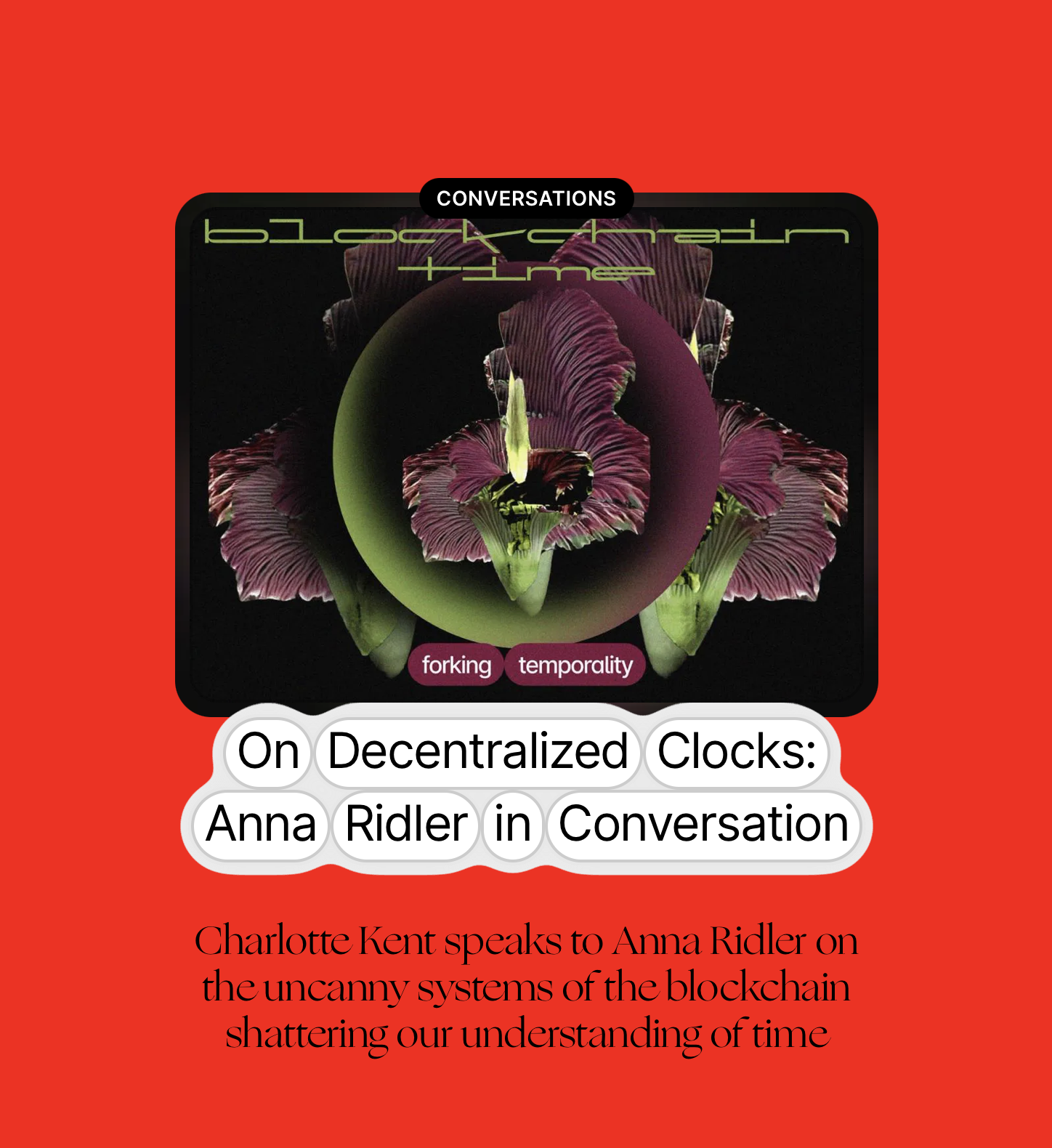
On Decentralized Clocks: Anna Ridler in Conversation
ZORA ZINE | September 2022
A conversation with Charlotte Kent examining how blockchain technology introduces a radical disruption of shared temporal frameworks. Where blockchain claims immutability - a fixed past and reliable future - its lived experience is the opposite: vertiginously fast, disconnected from calendrical, mechanical or natural time. The discussion moves from blockchain's specific temporal claims to a broader argument about how different computational systems of timekeeping progressively unmoor us from ecological and embodied experience, and what it might mean to build artworks that resist or inhabit that disruption.
Read in full →2021
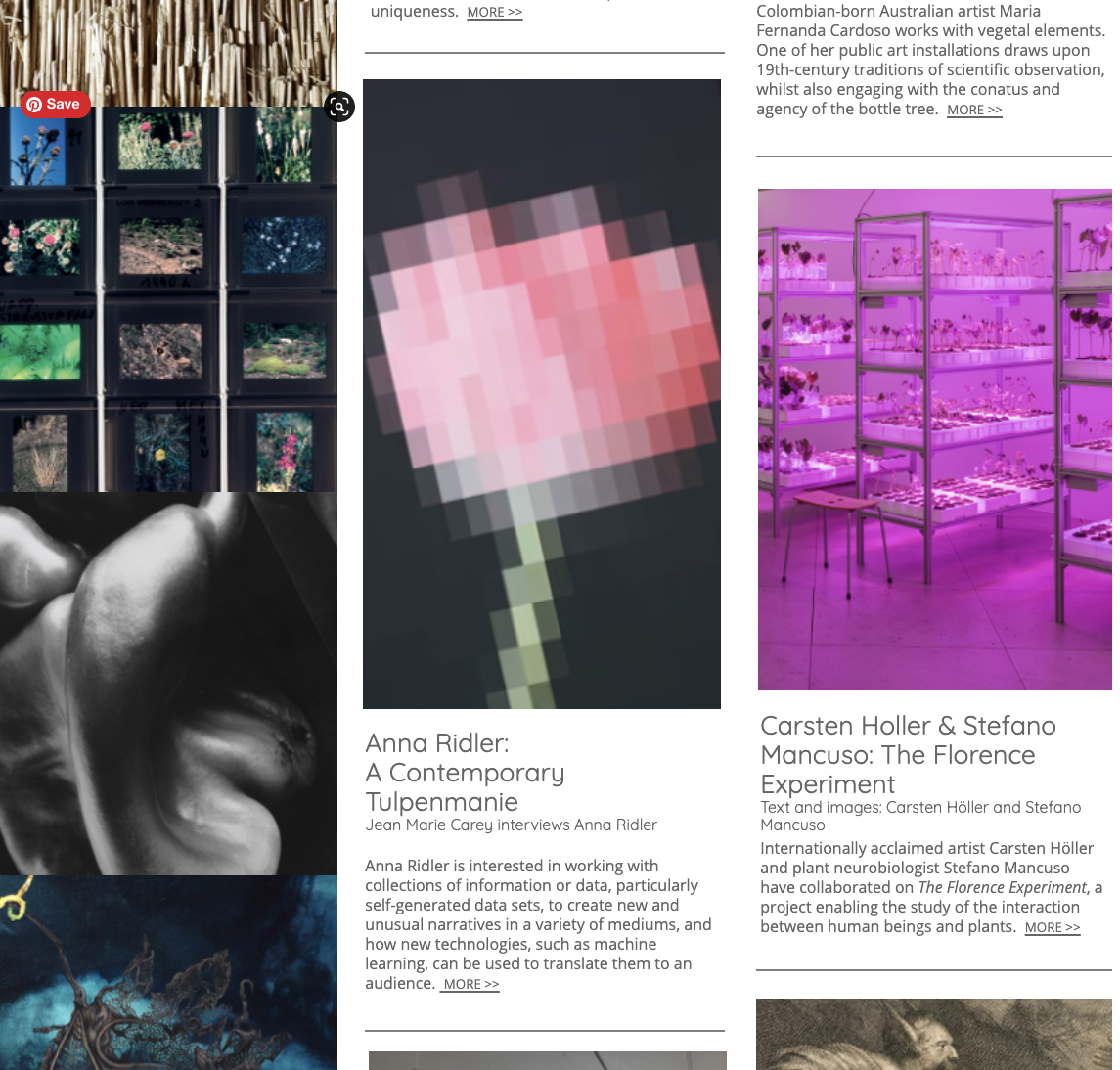
A Contemporary Tulipmanie
Antennae Journal | March 2021
Published in Antennae's issue on art and ecology, this essay draws direct lines between the seventeenth-century Dutch tulip mania - the first speculative financial bubble, driven by the scarcity and beauty of a flower - and the logics of commodification at work in contemporary machine learning and cryptocurrency markets. It argues that natural objects have always served as the raw material for financial abstraction: classified, standardised and made tradeable through the same operations that machine learning now performs on images. The tulip becomes a hinge between botanical taxonomy, speculative capital and the dataset economy.
Read in full →2019
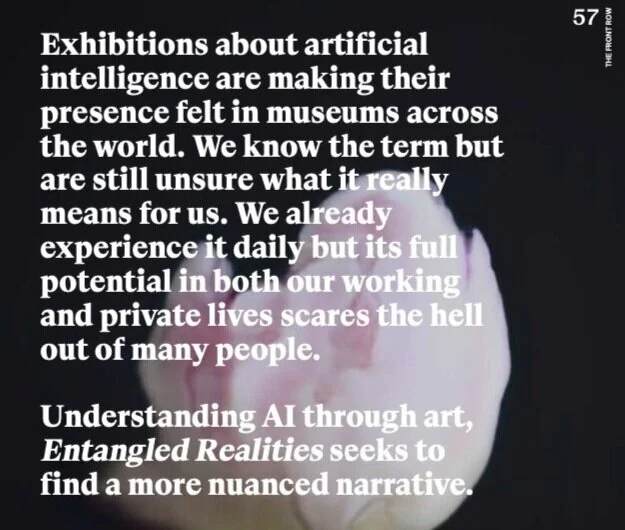
Making sense of it all
DAMN Magazine | August 2019
Written to accompany Entangled Realities, a group exhibition at HeK Basel, this essay examines what it means to make and experience art when the boundary between human and algorithmic authorship has become genuinely difficult to locate. Moving beyond anxieties about authenticity and fakery, it asks more structural questions: who is responsible for what a machine produces and what forms of attention - legal, ethical, aesthetic - are adequate to work that emerges from a collaboration between an artist and a system that no one fully controls.
Read in full →2018
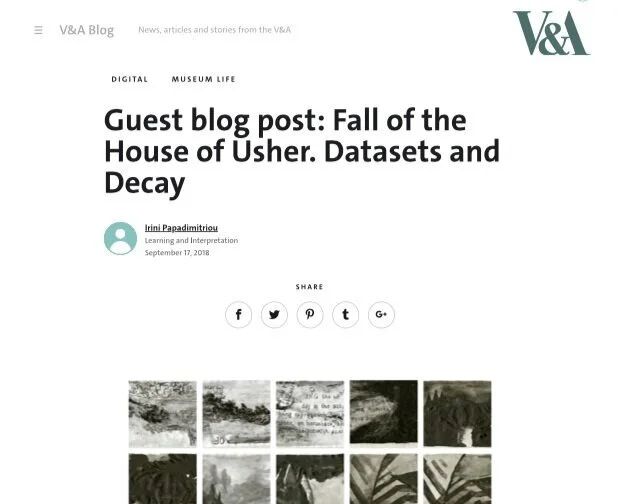
Fall of the House of Usher. Datasets and Decay
V&A | September 2018
An essay on the twelve-minute animation trained on hand-drawn images, published by the V&A. It reflects on the specific qualities that machine learning brings to themes of memory, repetition and deterioration that could not be achieved through conventional animation: the way a GAN trained on drawings does not reproduce them faithfully but generates something between memory and distortion, haunted by its training data without being identical to it. The essay argues that the dataset, as material, carries its own entropy - that what the machine learns is always already in the process of decay - and that this quality is not a technical limitation but the central subject of the work.
Read in full →2017
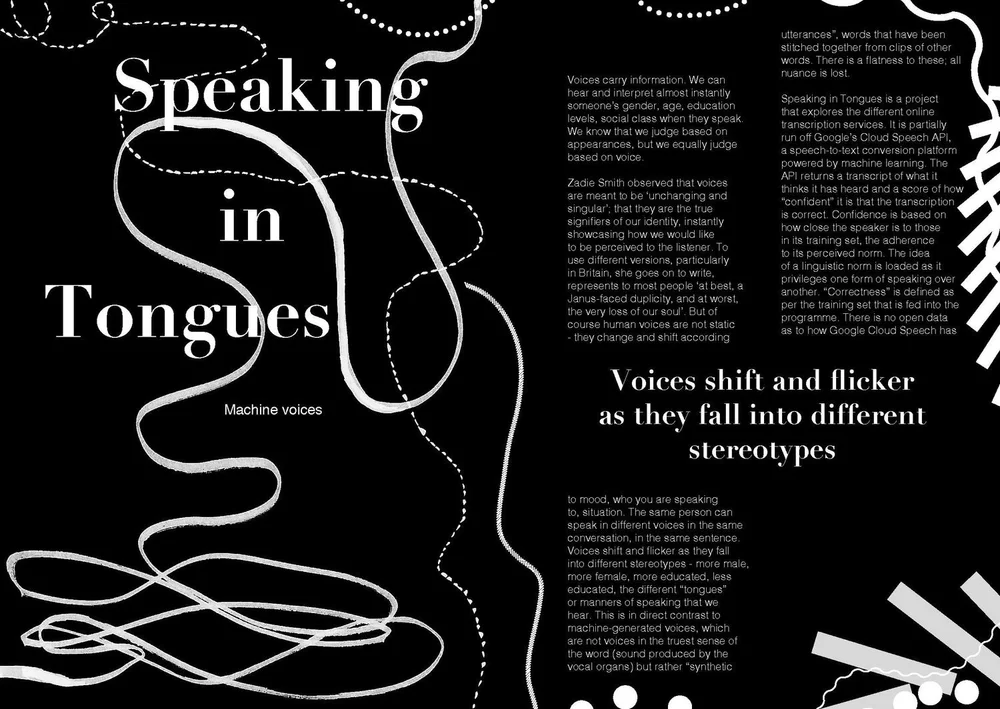
Speaking in Tongues
Syrup Magazine | October 2017
An essay on voice, class and identity in Britain, written before the widespread availability of AI voice synthesis but anticipating its implications. Drawing on Zadie Smith's writing on accent and self-presentation, it examines how voices are read as fixed signals of class and education - and how the performance of multiple voices is treated culturally as a form of inauthenticity or betrayal. The essay asks what it means to manipulate, reproduce or multiply a voice through technology and how that disruption of assumed vocal identity might function as a form of resistance.
Read in full →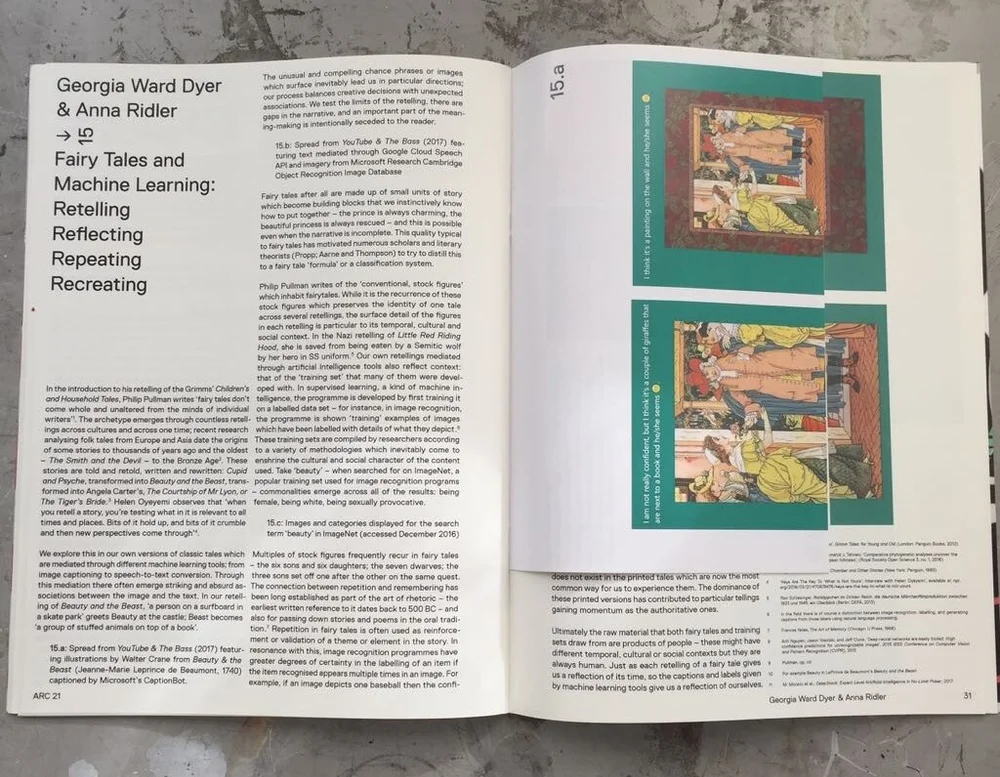
Fairy Tales and Machine Learning: Retelling, Reflecting, Repeating, Recreating
ARC Magazine | January 2017
An early essay connecting the generative logic of machine learning with the structure of folk tales. Drawing on Philip Pullman's reflections on retelling and Helen Oyeyemi's writing on what survives across versions of a story, it argues that GANs operate through a similar process of cultural transmission: learning a body of material, transforming it through repetition and producing new instances that are recognisably descended from their training data but never identical to it. The essay proposes that work generated through machine learning should be understood not as a copy or a forgery but as another iteration in a long chain of retellings - the archetype emerging, as it always has, through countless variations.
Read in full →